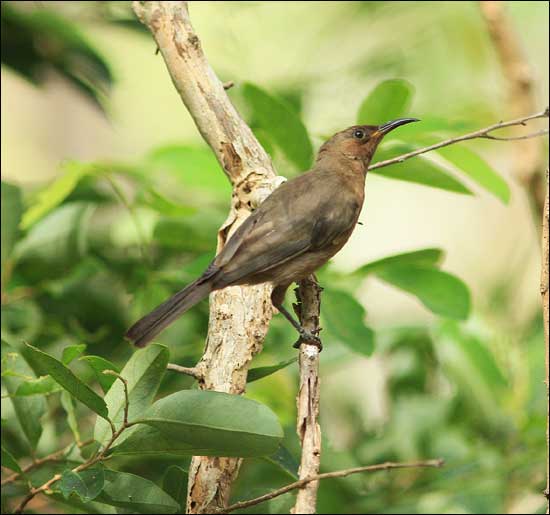
These are found in northern Australia, where there are two separated populations; one in coastal areas of the Northern Territory to about the Queensland border and another from Cape York Peninsula down the east coast as far south as the New South Wales border, though the species is rare south of Rockhampton. Dusky Honeyeaters are also found in New Guinea, the Moluccas and the Torres Strait islands.
They inhabit a wide range of habitat types, including monsoonal forests and scrubs, woodlands, swamps and almost any area near water. In our area they are fairly common but they are active and fast moving and can be difficult to spot, I’ve found the best places to look for them are in the beach scrub growing in the older dunes behind beaches like Kinka, Lammermoor and Kemp.
They mainly feed on nectar but like most of our honeyeaters they supplement this with pollen, berries and insects.
Males and females look the same and breeding takes place in the dry season, typically March to September. The nest is a small, neat cup usually constructed with fine bark, spiderwebs, and leaves on a well-hidden branch high over water.