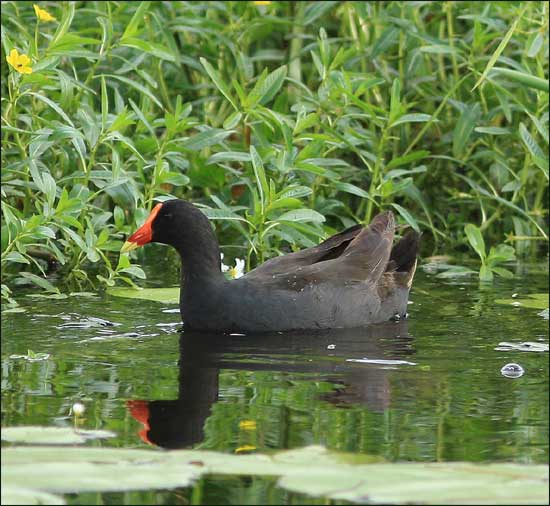
These are widespread in eastern and south-western Australia, ranging from Cooktown to eastern South Australia and in the southern corner of Western Australia, they are also found in Indonesia and New Guinea. Their appearance is similar to the Purple Swamp Hen but these are noticeably larger, have a distinct purple-blue colouring and a completely red bill and face shield.
Their natural habitat is on the fringes of freshwater lakes, creeks and swamps but they have adapted well to the presence of artificial water sources such as dams, urban ponds, parks and gardens.
They are omnivorous browsers that will eat algae, water plants and grasses, seeds, fruits, molluscs and other invertebrates, even refuse and carrion.
The sexes look alike and form breeding groups of two to seven birds, two or more females in the group will lay their eggs in the same nest with all members of the group helping to incubate the eggs and feed the young. The nest is a shallow platform made from reeds and other water plants among reeds or on floating platforms in open water. Young birds are duller and browner than adults and have an olive green bill and face shield.