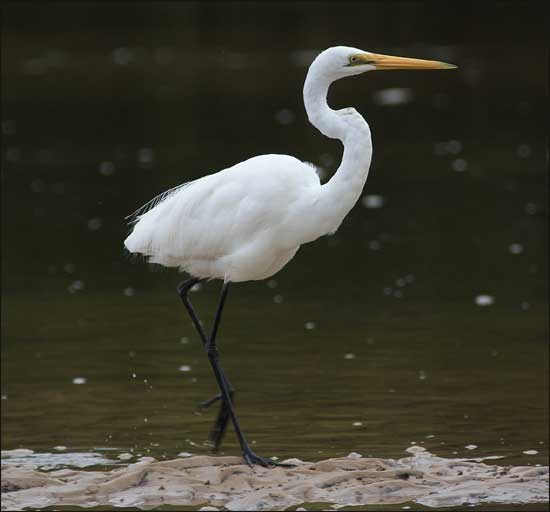
These are common throughout Australia, with the exception of the most arid areas, and are found across most of the tropical and warmer temperate regions of the world. They can be confused with other white egrets but can be distinguished by their overall larger size, proportionately longer neck and the pronounced kink in their neck.
They are found in almost any area of shallow water including mangrove estuaries, wetlands and damp grasslands.
Fish make up the bulk of their diet but they also eat molluscs, amphibians, aquatic insects, small reptiles, crustaceans and occasionally other small animals. They hunt by wading through the shallows or standing motionless before stabbing at prey.
They breed in colonies, often in association with cormorants, ibises and other egrets. During the breeding season the bill turns mostly black and the facial skin becomes green. Also at this time long hair-like feathers (nuptial plumes) hang across the lower back: males and females are identical in appearance.
Adults jointly construct the nest which is a large platform of sticks placed in a tree over the water. The previous years' nest is often re-used with both sexes incubating the eggs and caring for the young.