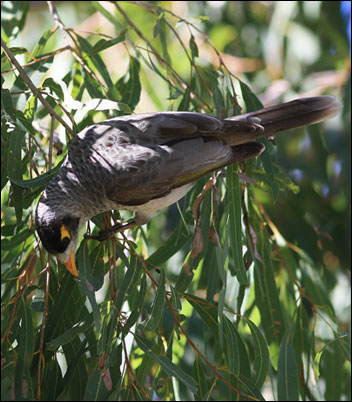
These honeyeaters are very common in the eastern and southern states of Australia, ranging from northern Queensland along the eastern coast to South Australia and Tasmania. Their normal habitat is scrub and woodlands with a preference for shorter grasses and thinner underbrush but they are very adaptive and inhabit degraded woodlands readily and have adjusted to urban areas far better than most other birds.
Their typical diet consists of nectar, fruit and insects but occasionally feed on small reptiles or amphibians, they will also feed on grains and can be seen foraging in grasslands.
An extremely territorial and gregarious bird, they live in groups or colonies ranging in size from a few birds up to several hundred. They will aggressively defend an area against all invaders, harassing and chasing away both larger and smaller birds to such an extent that there can be a serious reduction in local species diversity.They breed in colonies and several broods may be reared during a single season. The female constructs the nest and incubates the eggs alone, but both sexes will care for and feed the young birds, other members of the group also feed the young.